Nabad iyo Nuur: Social Cohesion & Reconciliation Program – Kismayo and Dhobley
By Samale Foundation
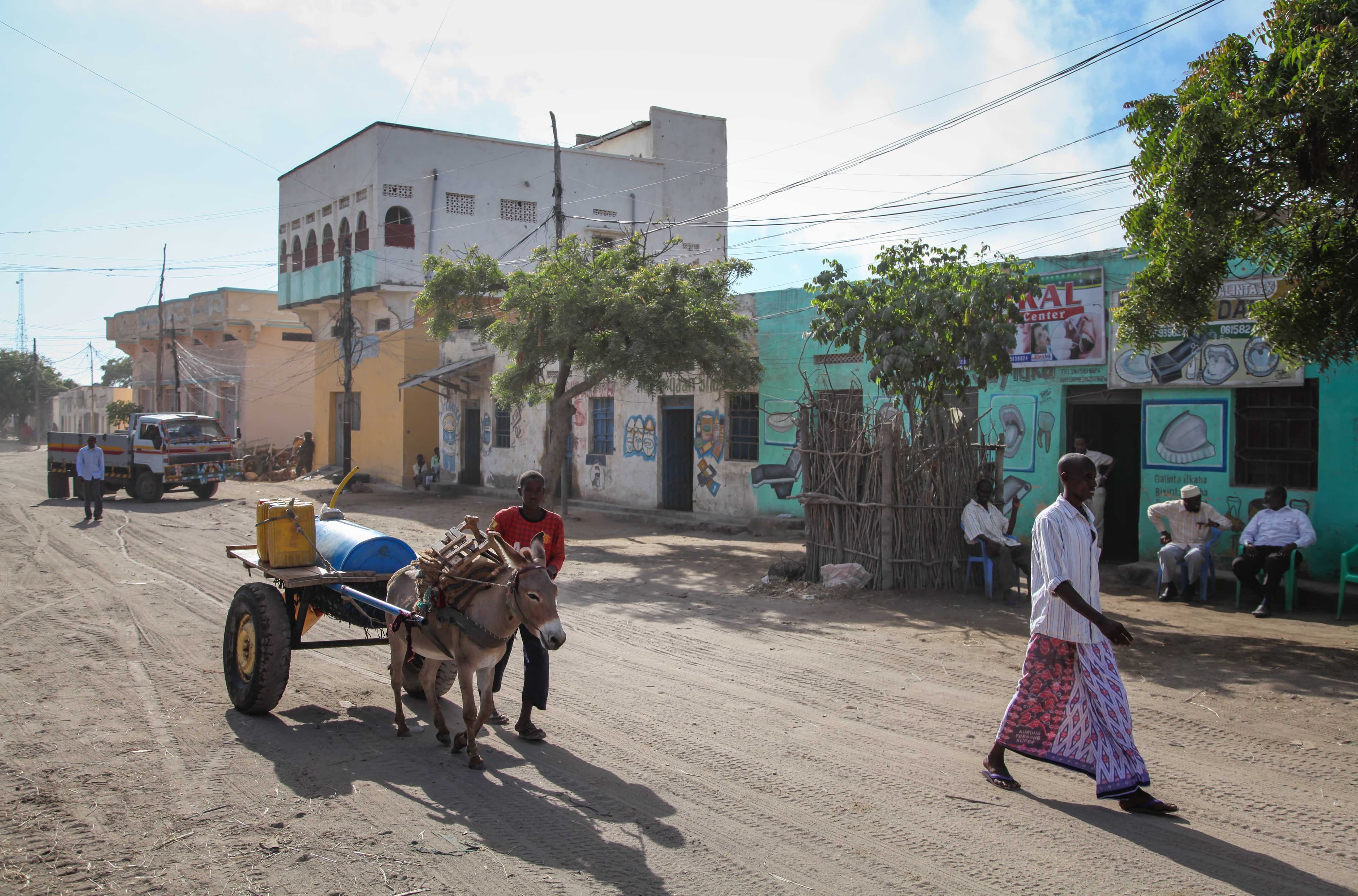
The Nabad iyo Nuur initiative is designed as a long-term peacebuilding and social transformation program focused on Kismayo’s urban neighborhoods and the strategically significant border town of Dhobley. These locations represent two of Jubaland’s most socially complex, economically vibrant, yet politically sensitive environments. Over the years, displacement, rapid urbanization, and economic transition have reshaped community relations in both towns. However, beneath this diversity lie unresolved tensions, fragmentation across social lines, and periodic disputes triggered by pressure on land, livelihoods, and public services. The initiative draws on lessons from similar peacebuilding programs recently implemented across Somalia, which demonstrated the need for deeper, continuous reconciliation rather than isolated trainings or symbolic events.
Kismayo’s expanding urban settlements present a unique blend of opportunity and fragility. The city hosts long-established residents, new returnees from abroad, internally displaced households, pastoralist migrants, business entrepreneurs, and youth seeking stability. Such diversity generates tensions around rental markets, property rights, informal taxation, and competition over business spaces. Several peace organizations working in the area have highlighted a recurring challenge: tensions often originate in everyday interactions, yet existing peace frameworks tend to focus on high-level political reconciliation. Nabad iyo Nuur addresses this gap by embedding peacebuilding within the daily lived realities of residents, prioritizing issues that matter most to households—neighbourhood boundaries, shared spaces, youth interactions, and access to opportunities.
Dhobley’s context differs significantly from Kismayo, yet faces parallel challenges. The town’s proximity to the international border makes it a hub for trade, seasonal migration, security operations, and cross-border social networks. Communities share grazing routes, water access points, and market spaces, but disputes can
arise quickly when movement restrictions tighten, water becomes scarce, or economic activities are disrupted. In recent years, several organizations attempted short-term interventions in Dhobley, but few provided the sustained facilitation required to build trust between groups or to create neutral platforms for dialogue. The Nabad iyo Nuur initiative introduces a structured reconciliation process designed specifically for a border environment where local dynamics intersect with wider regional factors.
The reconciliation tracks in both towns follow a sequenced methodology informed by tested Somali peacebuilding traditions and global dialogue frameworks. The approach begins with conflict diagnostics, where Samale Foundation’s team and local partners map grievances, incidents, social fractures, and actors influencing stability. This diagnostic phase ensures accuracy, cultural awareness, and sensitivity to historical grievances. Following this, trust-building sessions are organized to lower tensions and encourage transparent communication. These sessions are particularly important in Kismayo, where urban anonymity often allows misunderstandings to escalate without resolution.
After trust-building comes facilitated dialogue, which involves residents, elders, women’s representatives, youth leaders, and local authorities. These dialogues are not general conversations; they are structured around shared challenges such as land disputes, market access, or neighbourhood security. In Dhobley, discussions often revolve around grazing management, border mobility, and equitable access to water points. Each dialogue is supported by trained mediators who help participants analyze root causes and negotiate workable agreements. The result is a set of practical commitments co-created by the community, which are later documented and publicly recognized by district administrations, giving them legitimacy and long-term relevance.
Nabad iyo Nuur places strong emphasis on women and youth as peace actors. This emphasis is grounded in evidence from recent UN and INGO-led initiatives that demonstrated how women mediators bridge communication gaps in communities and how youth networks influence public behaviour. The initiative strengthens women’s platforms in both locations, equipping them with enhanced mediation, leadership, and conflict-prevention skills. Youth networks receive mentorship and support to lead behaviour change campaigns, mediate minor disputes, and monitor emerging tensions in hotspots such as bus stations, informal market stalls, and residential intersections.
To reinforce reconciliation with tangible social integration, the initiative implements inclusive community activities that transform peace agreements into visible action. These activities include joint community clean-ups, collective rehabilitation of shared infrastructure, cultural exhibitions celebrating diversity, and youth sports diplomacy events. Such activities help rebuild social bonds by providing shared experiences and shifting community narratives away from suspicion and competition toward unity and cooperation.
Ultimately, the long-term outcome of Nabad iyo Nuur is a measurable shift toward coexistence and mutual respect. Kismayo becomes an urban environment where social cohesion is stronger, neighbourhood disputes are resolved peacefully, and youth and women play prominent roles in community stabilization. Dhobley evolves into a more predictable and trust-based town where border-related stressors are managed cooperatively rather than through confrontation. Through its integrated model, the initiative establishes a foundation for peace that is locally owned, institutionally supported, and sustainable in the long term.
Ultimately, the long-term outcome of Nabad iyo Nuur is a measurable shift toward coexistence and mutual respect. Kismayo becomes an urban environment where social cohesion is stronger, neighbourhood disputes are resolved peacefully, and youth and women play prominent roles in community stabilization. Dhobley evolves into a more predictable and trust-based town where border-related stressors are managed cooperatively rather than through confrontation. Through its integrated model, the initiative establishes a foundation for peace that is locally owned, institutionally supported, and sustainable in the long term.
⏱️ Estimated reading time: 8 min
Related Stories
Northern Kenya’s vast drylands conceal an escalating struggle for survival. Samale Foundation promotes peace through community empowerment and dialogue.
Oct 19, 2022
Peace is not built in conference rooms—it’s forged in village gatherings under acacia trees. Learn how Samale Foundation nurtures trust through dialogue and justice.
Apr 2, 2024